
How biotechnology, speed, and manufacturing flexibility are reshaping global poultry disease control
Key Points
The poultry sector is undergoing rapid structural change, driven by rising global protein demand, tighter biosecurity requirements, and ongoing pressure from major diseases such as avian influenza, Newcastle disease, infectious bronchitis, and infectious bursal disease. These factors are pushing vaccine development and production into a new era defined by speed, adaptability, and scalability.
For decades, vaccine manufacturing has depended heavily on embryonated egg-based production. This system remains highly reliable and globally entrenched, but it is inherently limited in flexibility and scale-up speed. The emerging model is not about replacing this infrastructure, but enhancing it with advanced biotechnology platforms that improve responsiveness without requiring wholesale reinvestment.
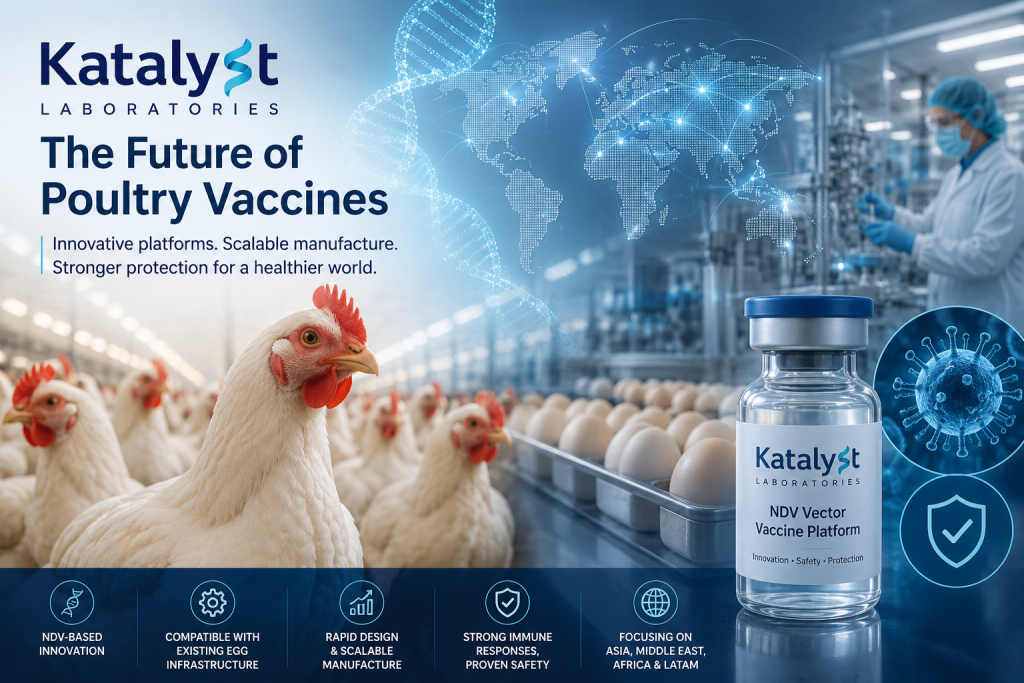
A major direction of innovation is recombinant vector technology, particularly NDV-based platforms that can be engineered to express antigens from multiple poultry pathogens, including avian influenza strains (H5, H9), infectious bronchitis, and infectious bursal disease. A key advantage of this approach is compatibility with existing egg-based manufacturing systems, enabling rapid industrial scaling using established GMP facilities.
Commercially, this shift is significant. Traditional vaccine development and scale-up are capital intensive and slow to respond to emerging outbreaks. Next-generation platforms aim to compress the timeline from pathogen identification to deployable vaccine candidate, while reducing dependence on entirely new production infrastructure.
Synthetic biology is playing a central role in this transition. Techniques such as codon-pair deoptimisation allow attenuation of viral vectors while preserving antigen structure and immunogenicity. This supports the development of safer, more predictable recombinant vaccines, reflecting a broader industry move away from empirical vaccine design toward rational engineering.
Speed of response is becoming a defining competitive factor. In outbreak situations, the ability to generate region-specific vaccines within weeks rather than months could materially change disease control outcomes. This is especially important in poultry production, where viral evolution and geographic strain differences often reduce the effectiveness of universal vaccine formulations.
Alongside egg-based systems, cell culture platforms such as Vero cells are expected to play a growing role. These systems offer potential advantages in consistency, scalability, and regulatory alignment, supporting more diversified and resilient manufacturing capacity.
Another key trend is the rise of multivalent vaccines. Producers are increasingly seeking solutions that reduce the number of interventions required while providing protection against multiple pathogens simultaneously. This demand is driving development of more complex but stable vaccine constructs.
Geographically, the most significant growth is expected in regions such as Asia, the Middle East, Africa, and Latin America, where poultry production is expanding rapidly and disease burden remains high. In some of these markets, faster regulatory pathways may also accelerate adoption of innovative vaccine technologies.
Summary
The future of poultry vaccine manufacture will be defined by platforms that combine established production infrastructure with advanced biotechnology. The most successful approaches will prioritise speed, adaptability, and cost-effective scalability, enabling faster responses to evolving disease threats while strengthening global food security.